

This edition of Michigan Moments examines the history of Alba, Michigan, from its Indigenous roots through the lumber era, the 1893 fire, and the town’s rebuilding in the early 20th century. The account relies on historic photographs, regional records, and documented timelines. Where the historical record is incomplete, that uncertainty is noted rather than filled with an assumption. The goal is not nostalgia for its own sake, but a clear look at how a small Michigan town formed, adapted, and endured.
Fire, Timber, and a Railroad Town
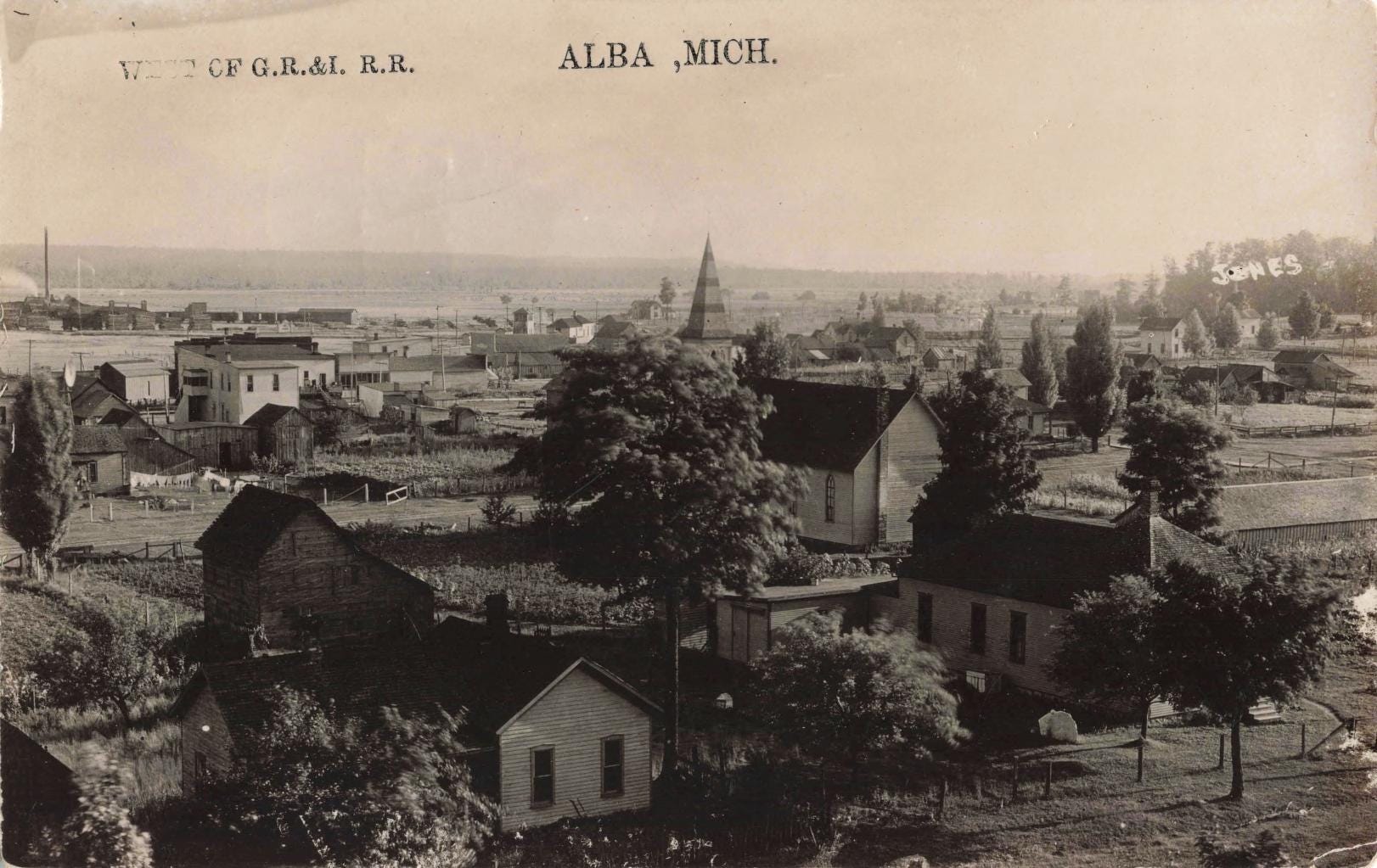
Alba, Michigan did not ease into existence.
It arrived quickly, built by timber, pulled forward by railroad tracks, and shaped by forces far larger than the town itself. Like many northern Michigan communities, Alba’s early years were intense, productive, and fragile.
Its story is not about spectacle. It is about work, loss, rebuilding, and staying put when the boom years ended.
Become a Member
Before Alba Had a Name
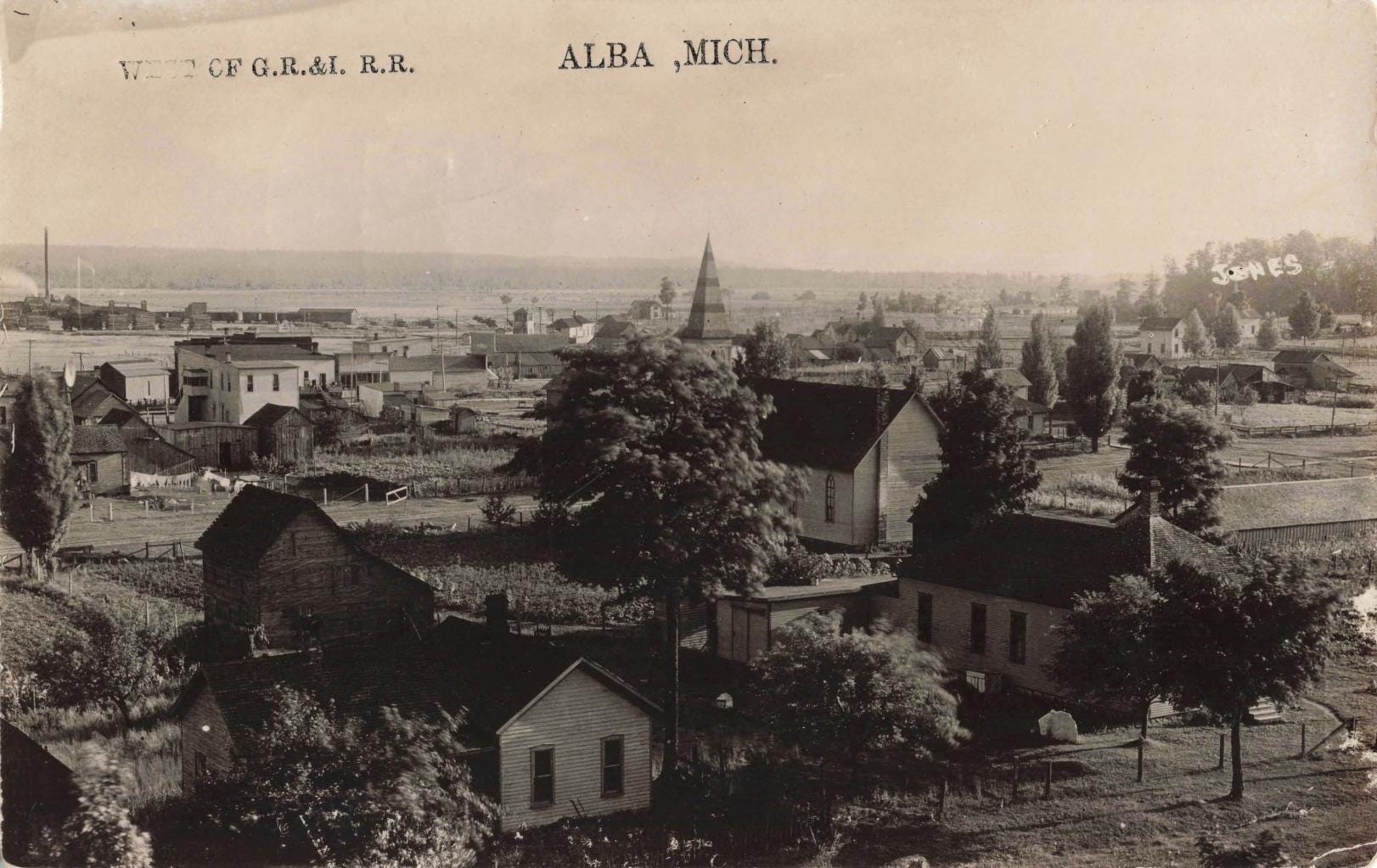
Long before a town stood here, the land around present-day Alba lay within the seasonal homelands of the Odawa (Ottawa) and Ojibwe (Chippewa) peoples.
These Anishinaabe nations traveled through the region for hunting, fishing, and trade. Rivers, forests, and portage routes mattered more than fixed boundaries. While no permanent Indigenous village has been documented at the exact site of Alba, the area was well known and regularly used long before treaties opened the land to settlement.
That history faded from view as railroads pushed north.
The Railroad Changes Everything
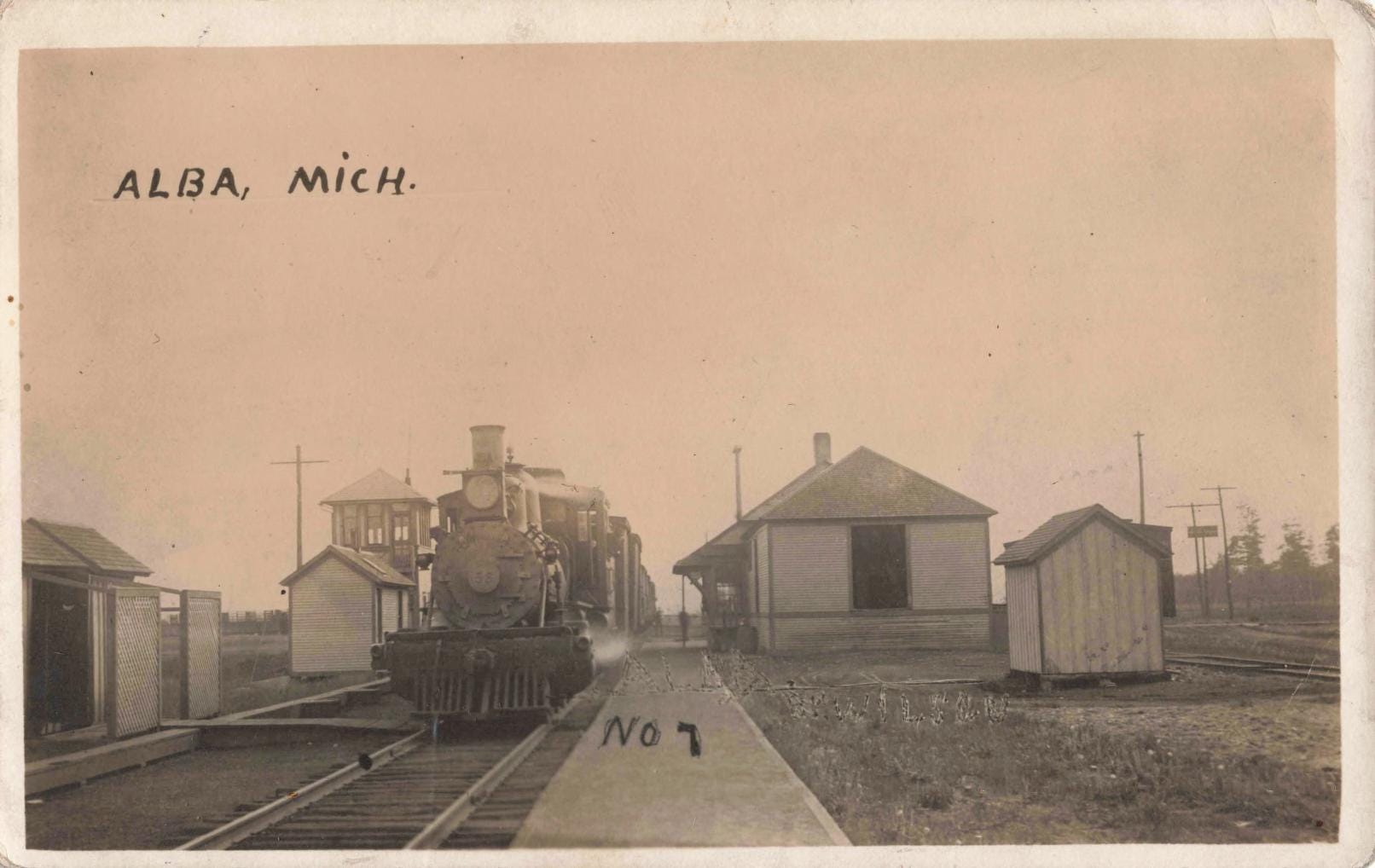
Alba’s modern story begins in the 1870s and 1880s, when railroad construction reached Antrim County.
Rail access changed the math of logging. Timber that once moved slowly by wagon could now be shipped in volume. Sawmills followed the tracks. Workers followed the mills.
By 1880, Alba was platted as a town. Its value was practical. Dense forest stood close to the rails. That was enough.
Early photographs show a compact but confident place. Storefronts lined the street. A hotel served travelers and loggers. A bank stood downtown, its solid design meant to signal permanence in a fast-moving economy.
Timber at a Scale Hard to Grasp
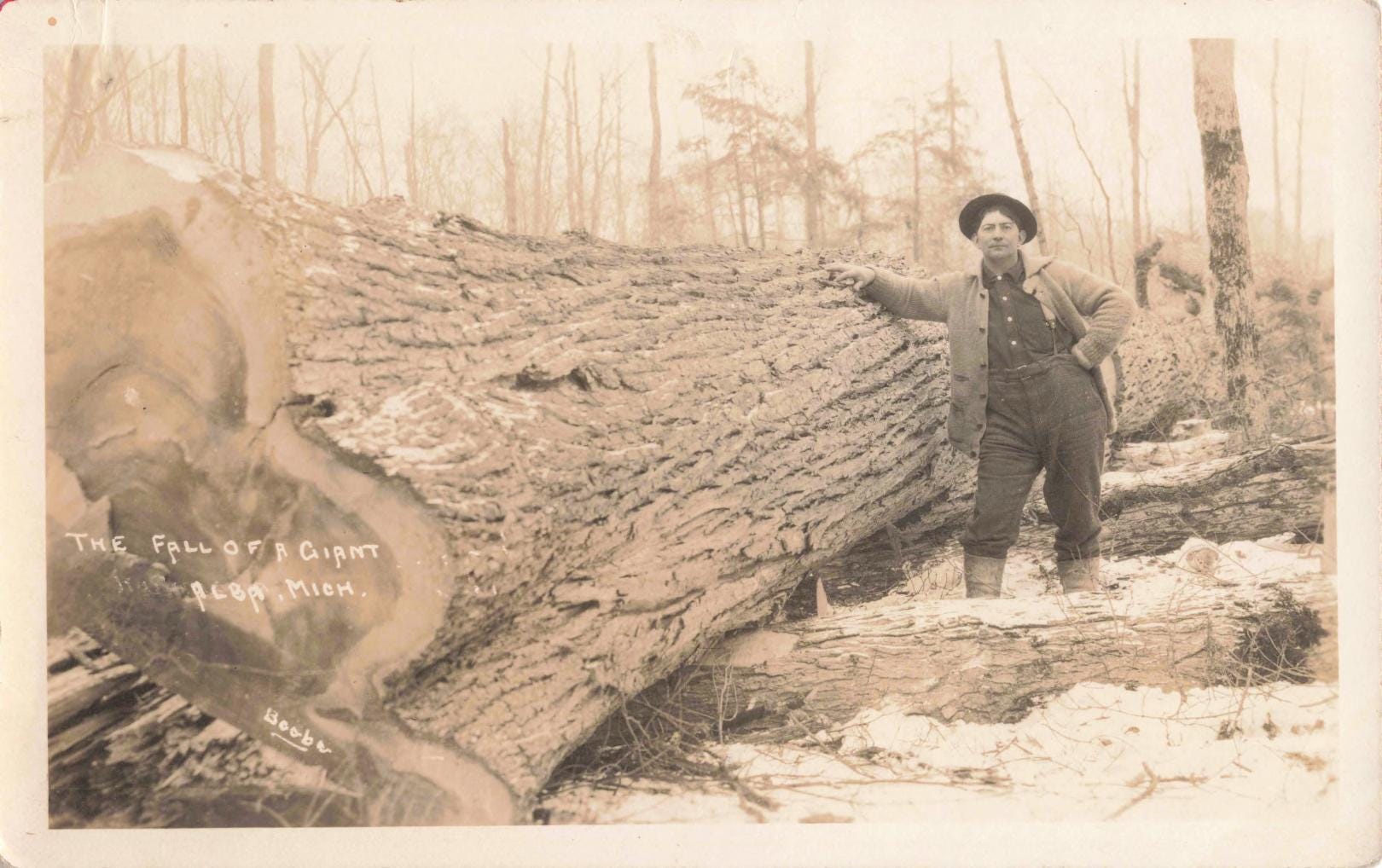
The forests around Alba were not small stands of regrowth. They were old hardwoods and pine, cut at an industrial scale.
One surviving photograph shows a man standing beside a single fallen tree. The trunk is massive. The man looks small by comparison. Images like this explain why Alba grew so quickly. The raw material was enormous.
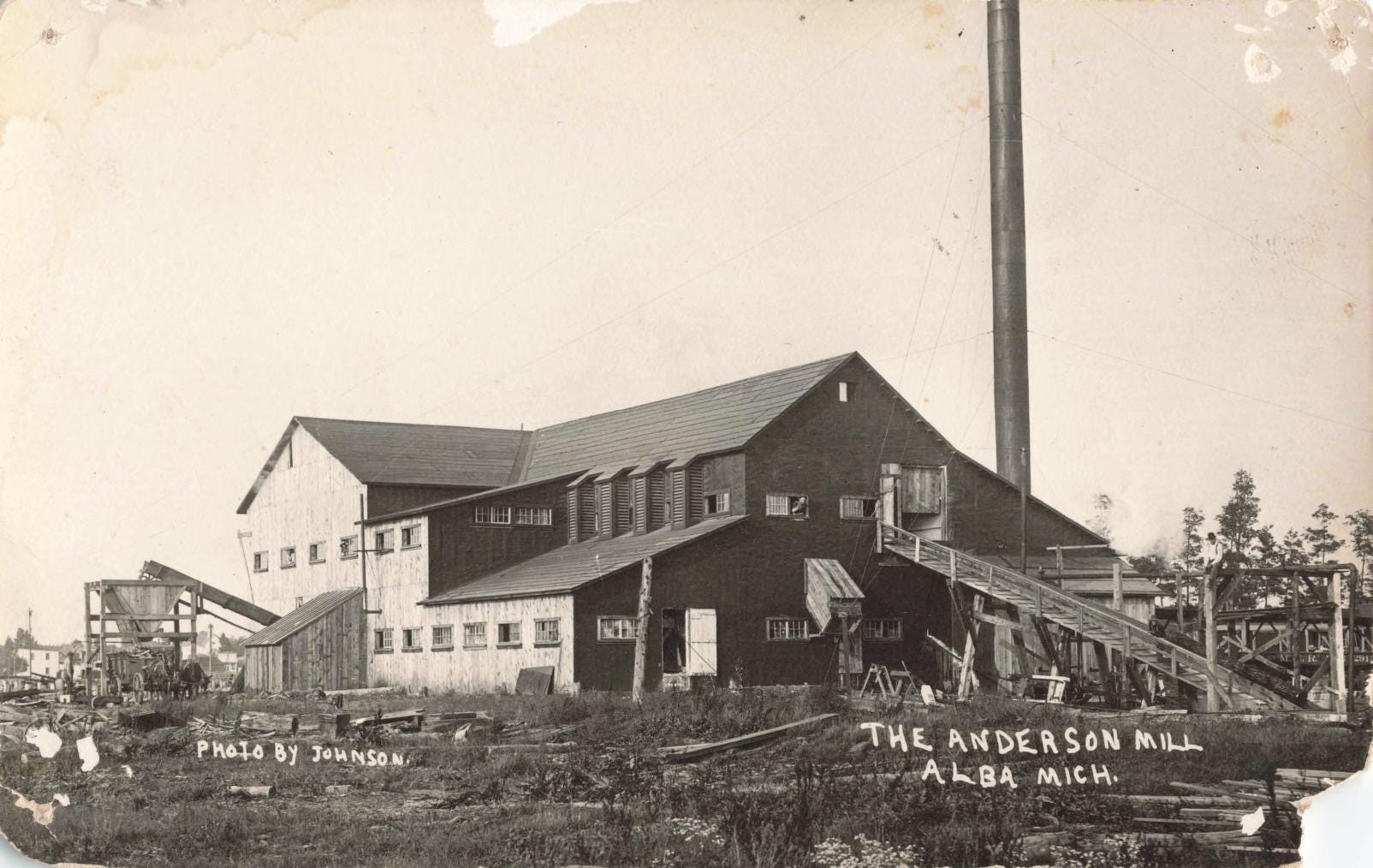
The Anderson Mill became one of the town’s industrial anchors. Lumber processing shaped daily life. Work was physical. Hours were long. Alba’s economy rose and fell with the sound of saws and steam.
1893: Fire Nearly Ends the Town
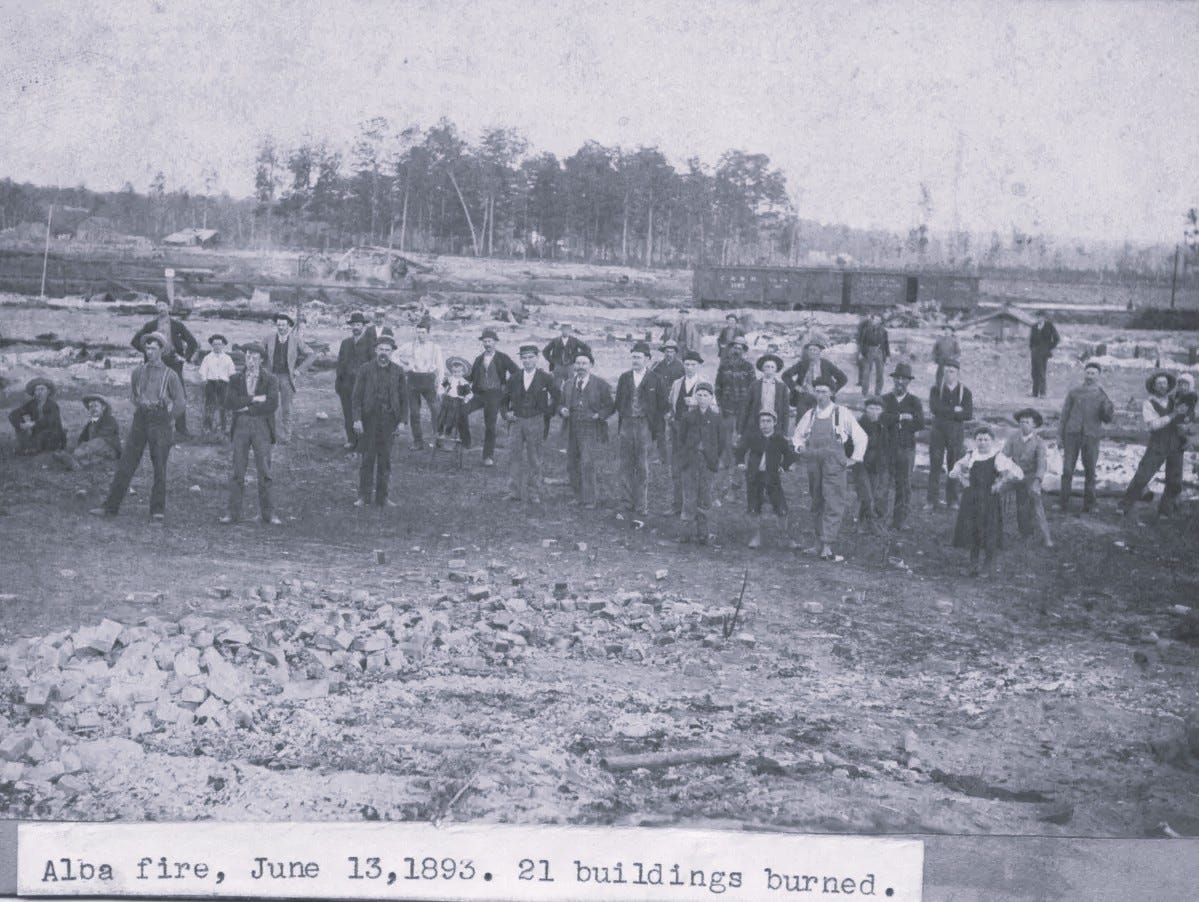
In 1893, Alba faced its most serious test.
A fire swept through the business district, damaging or destroying many commercial buildings. Wooden construction, tight spacing, and limited firefighting resources left little margin for control.
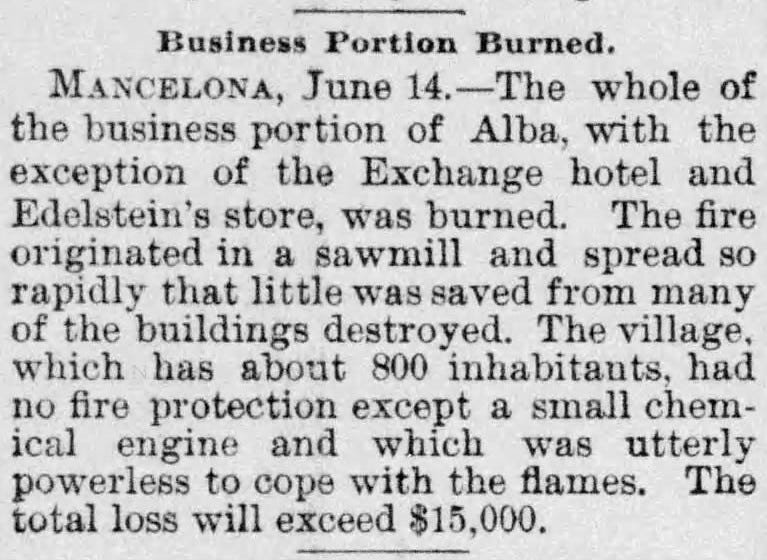
Records confirm extensive loss, though exact boundaries remain unclear. What is clear is the effect. Businesses vanished overnight. Families were displaced. A town built quickly now faced the question of whether it would continue at all.
Rebuilding After Disaster
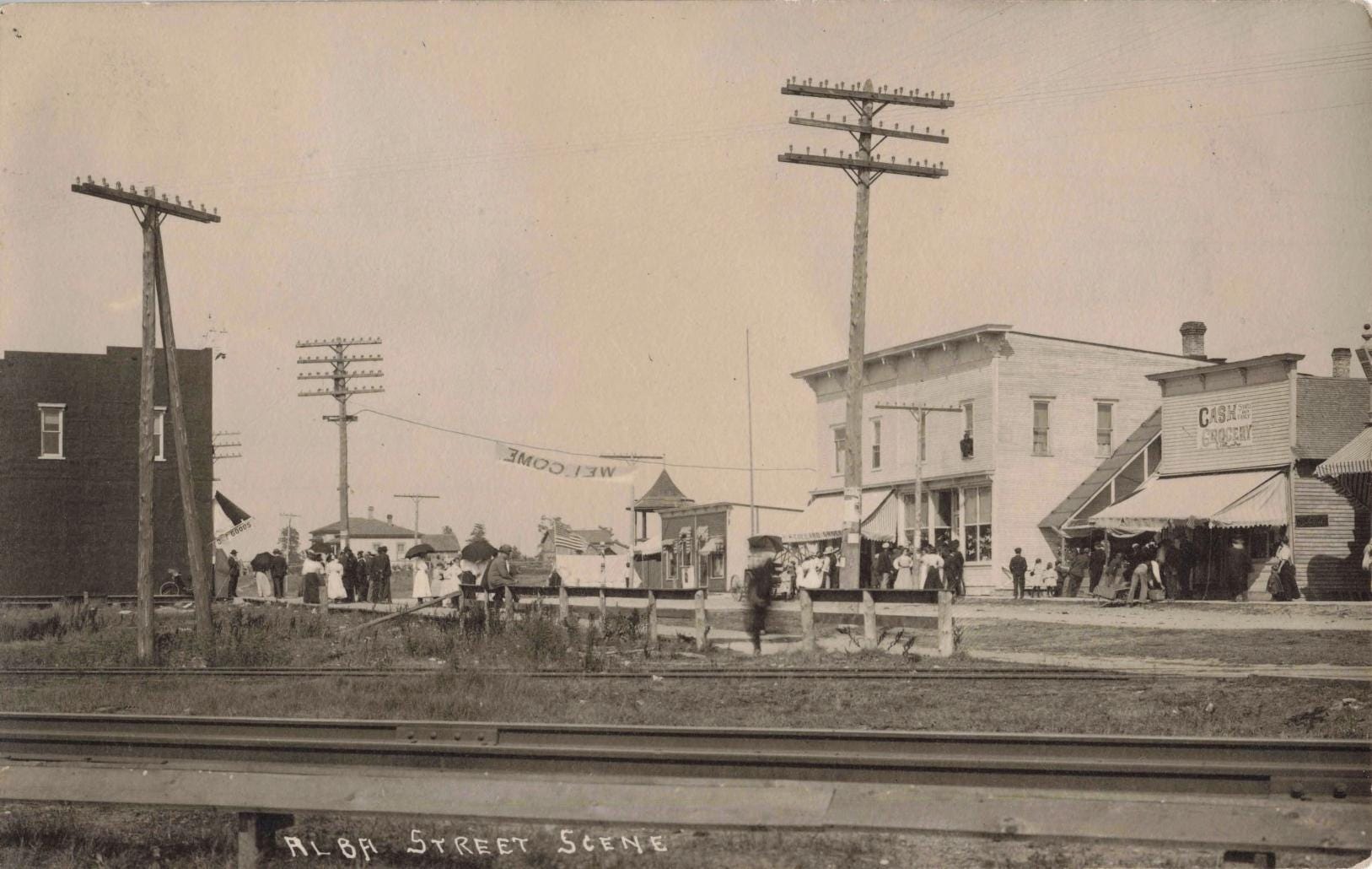
Alba did not disappear.
Instead, the town rebuilt.
Photographs taken after the fire show renewed storefronts, repaired streets, and reopened businesses. The bank returned. Restaurants resumed service. The post office reopened its doors.
One of the strongest signs of recovery was the Alba Electric Light Company. For a small northern Michigan town, operating a local electric plant was both practical and symbolic. It suggested that Alba was not temporary.
Electric light extended business hours and improved daily life. It also marked a shift from raw extraction toward civic investment.
A Working Main Street
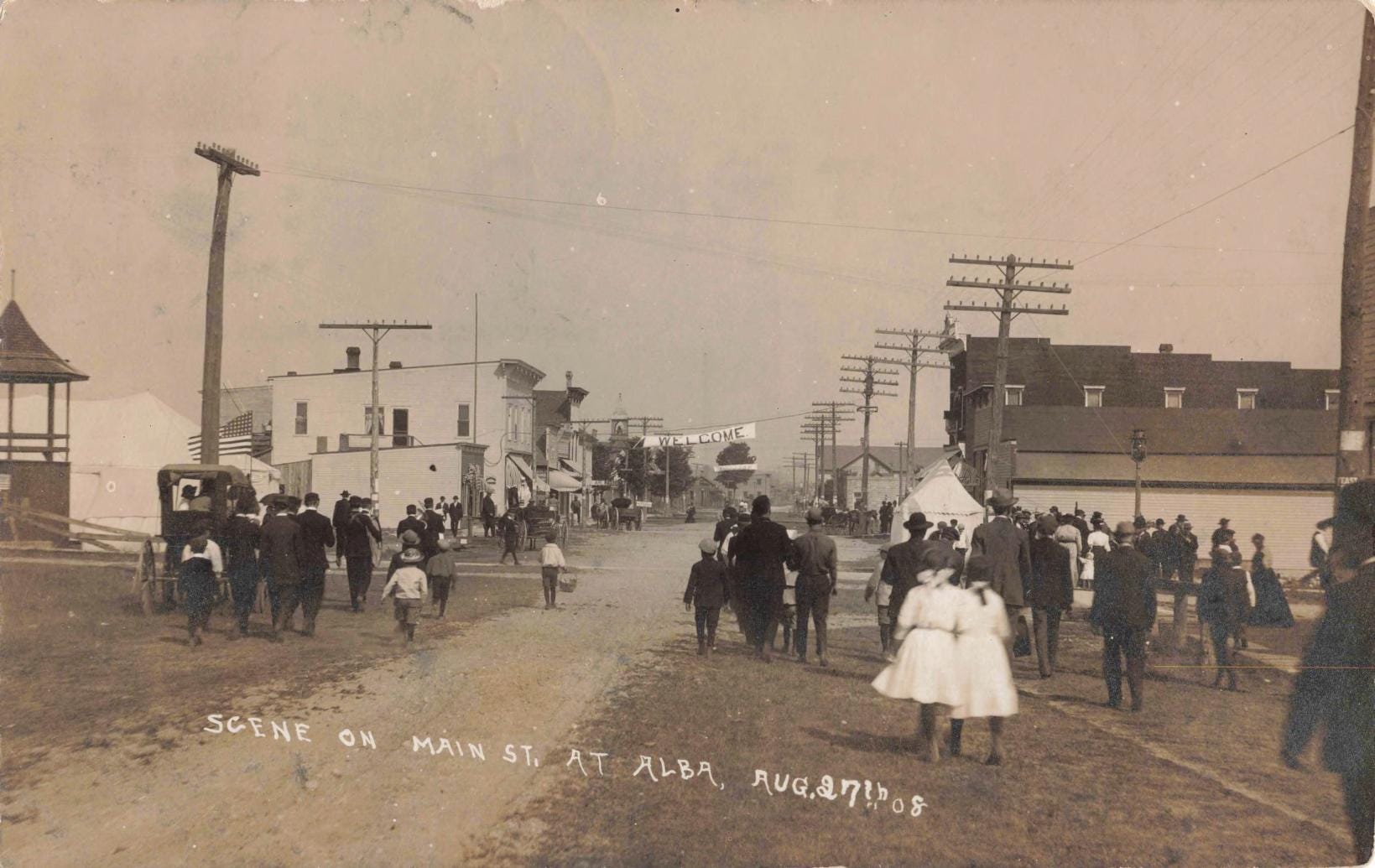
By the early 1900s, Alba supported more than lumber.
Photos show a commercial street that included:
A post office
Shoe and paint stores
Restaurants
Lodging
Banking
The Tuttle House hotel stood as one of the town’s most visible landmarks. Hotels in towns like Alba were not luxury spaces. They were working hubs. They served railroad crews, salesmen, and visiting officials. They also hosted local gatherings and informal meetings.
Another image shows Philips Restaurant, with staff standing proudly at the entrance. It is a small moment, but it reflects something important: Alba had routine. It had places where people gathered when the workday ended.
The Railroad Holds the Town Together
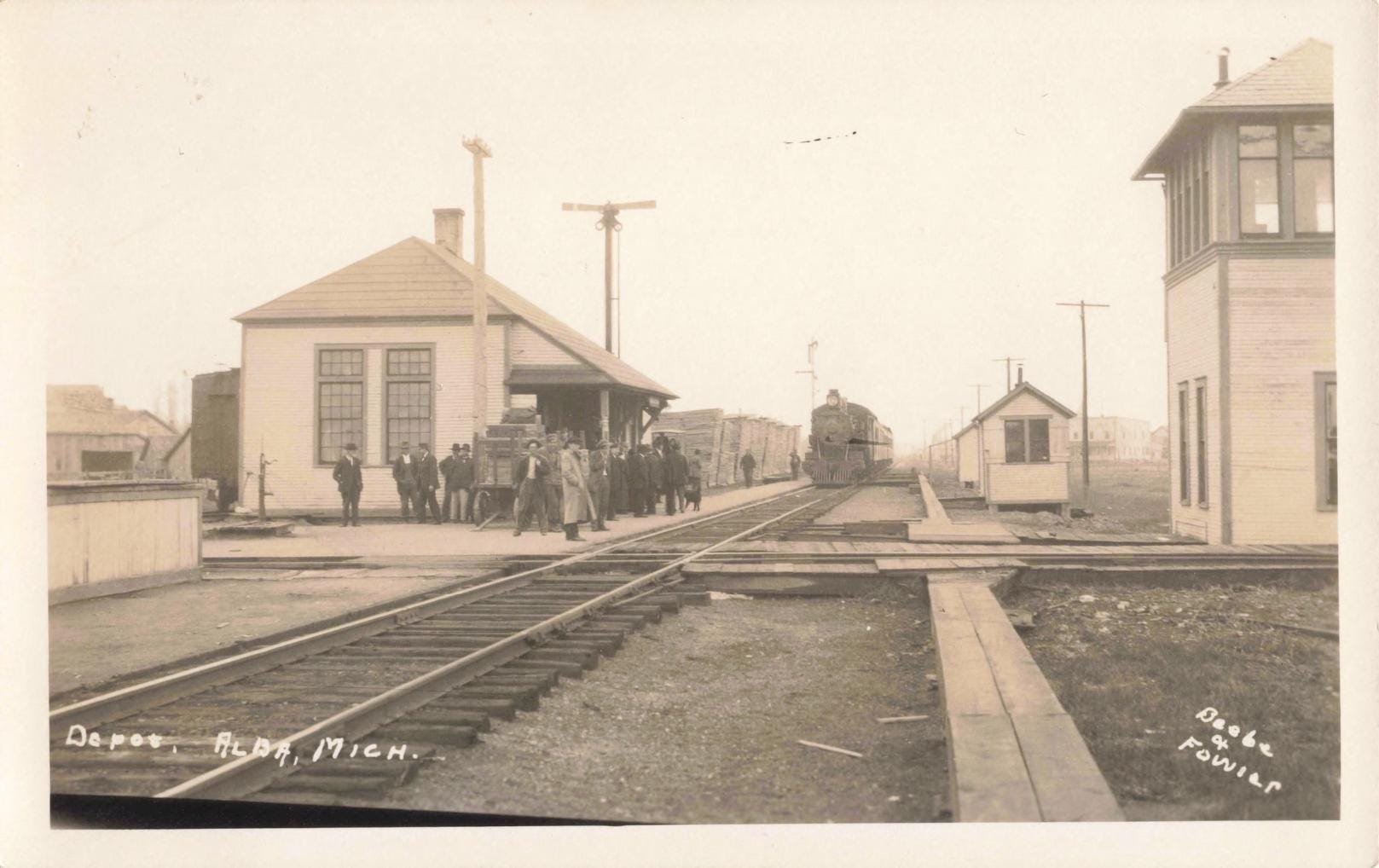
The railroad remained central well into the 20th century.
Photographs of Alba’s depot show steam locomotives stopped beside modest structures. Freight and passengers moved through daily. The railroad connected Alba to markets, supplies, and people far beyond Antrim County.
Without rail service, Alba’s timber could not have moved efficiently. Without rail service, rebuilding after the fire would have been far more difficult.
Schools and Civic Life
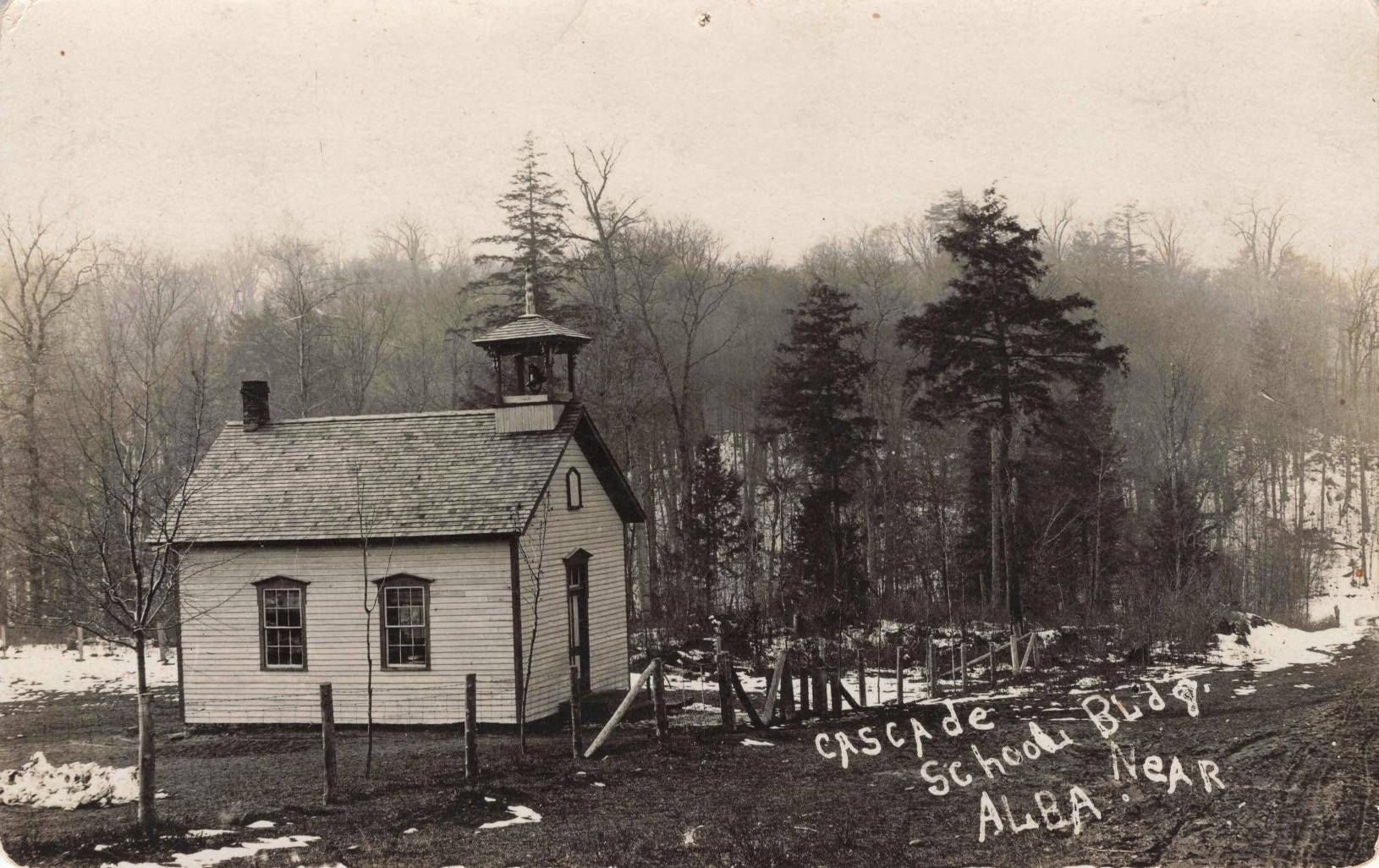
Alba invested in more than commerce.
A photograph of the Alba School shows a substantial building with a bell tower. Even as the economy shifted, education remained a priority. Schools were often among the first civic structures rebuilt after disaster, and Alba followed that pattern.
Churches, schools, and social gatherings helped stabilize life as the timber boom slowed.
The Depression and Camp Alba
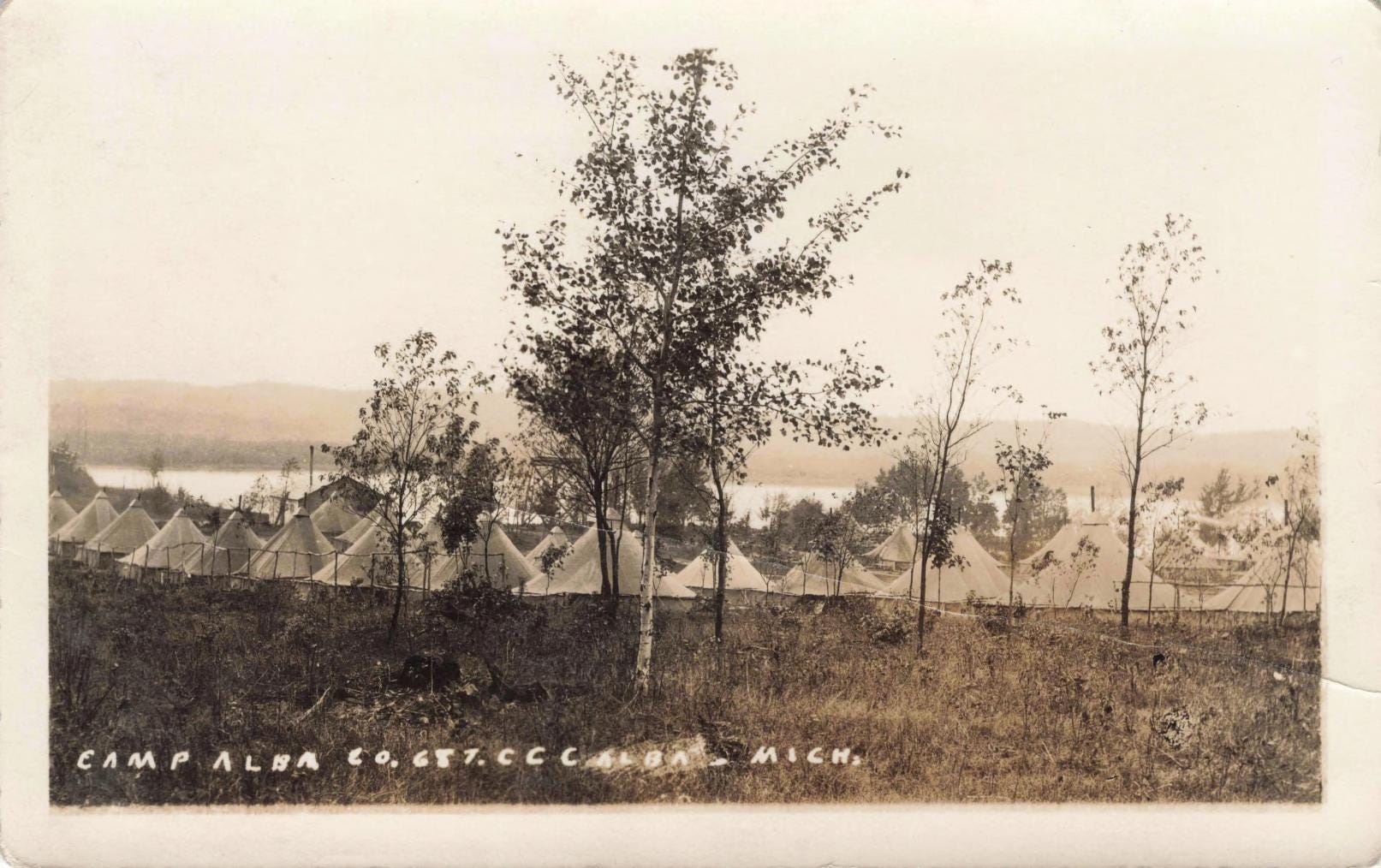
By the 1930s, the forests that built Alba were largely gone.
The Great Depression brought new pressure, but also new opportunity. Nearby Camp Alba, operated by Civilian Conservation Corps Company 657, housed rows of tents filled with young men employed by the federal government.
They planted trees. They built roads. They worked to restore land altered by decades of logging.
For Alba, the camp meant customers for local businesses and paychecks sent home. It also tied the town to a national recovery effort at a time when work was scarce.
A Lesser-Known Truth
It is often assumed that towns like Alba vanished when timber ran out.
Alba did not.
Growth slowed, but the town adapted. Agriculture increased. Small businesses remained. Civic institutions held on. The same rail access that once carried lumber helped sustain everyday life.
Alba’s history is not a story of collapse. It is a story of adjustment.
Reflection
Alba’s story does not hinge on a single event or figure. It turns on decisions made after the moment of crisis had passed. Fire damaged the town. Timber declined. Rail traffic slowed. None of that guaranteed survival. What followed depended on whether people chose to rebuild, stay, and adjust their expectations. Many did. Alba remained. In a state shaped by boom-and-bust towns, that choice may be the most important part of its history.


