

If you grew up with “Up North” summers, Higgins Lake can feel like a place you already know — even if you’ve never been there. The old postcards make that clear. They don’t just show water and sand. They show a whole vacation system: where people stayed, how they got around, and what it took to keep the shoreline running.
In today’s short video, I walk through several of the photos you’ve seen uploaded here and connect them to the real, everyday mechanics of a lake town. Watch first, then scroll — I’ve added the key images with captions so you can pause and study the details.
Start at the waterline

The most honest Higgins Lake photos begin at the shore. You see long docks, small boats, and people sitting still on purpose. The lake isn’t treated like a backdrop. It’s the main character.
Hotel porches and long stays
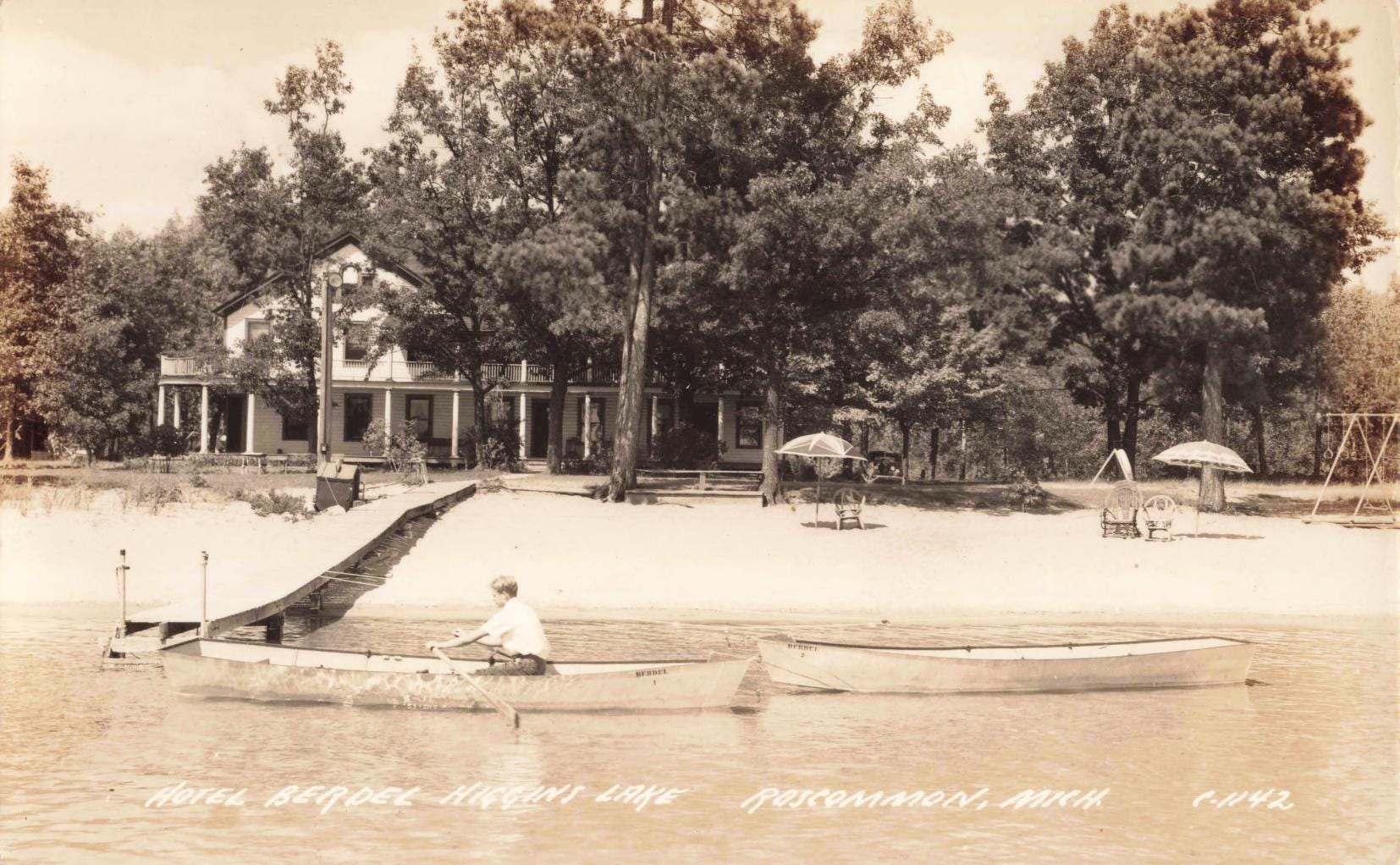
One thing the postcards get right: early lake vacations were not rushed. Resorts like Hotel Berdel were designed for longer visits. The wide porch wasn’t decoration. It was where people spent the hours between meals, swims, and evening talk.
Look at the porch line and the shade from the trees. This is a scene built around comfort, not speed.
Boats that carried summer
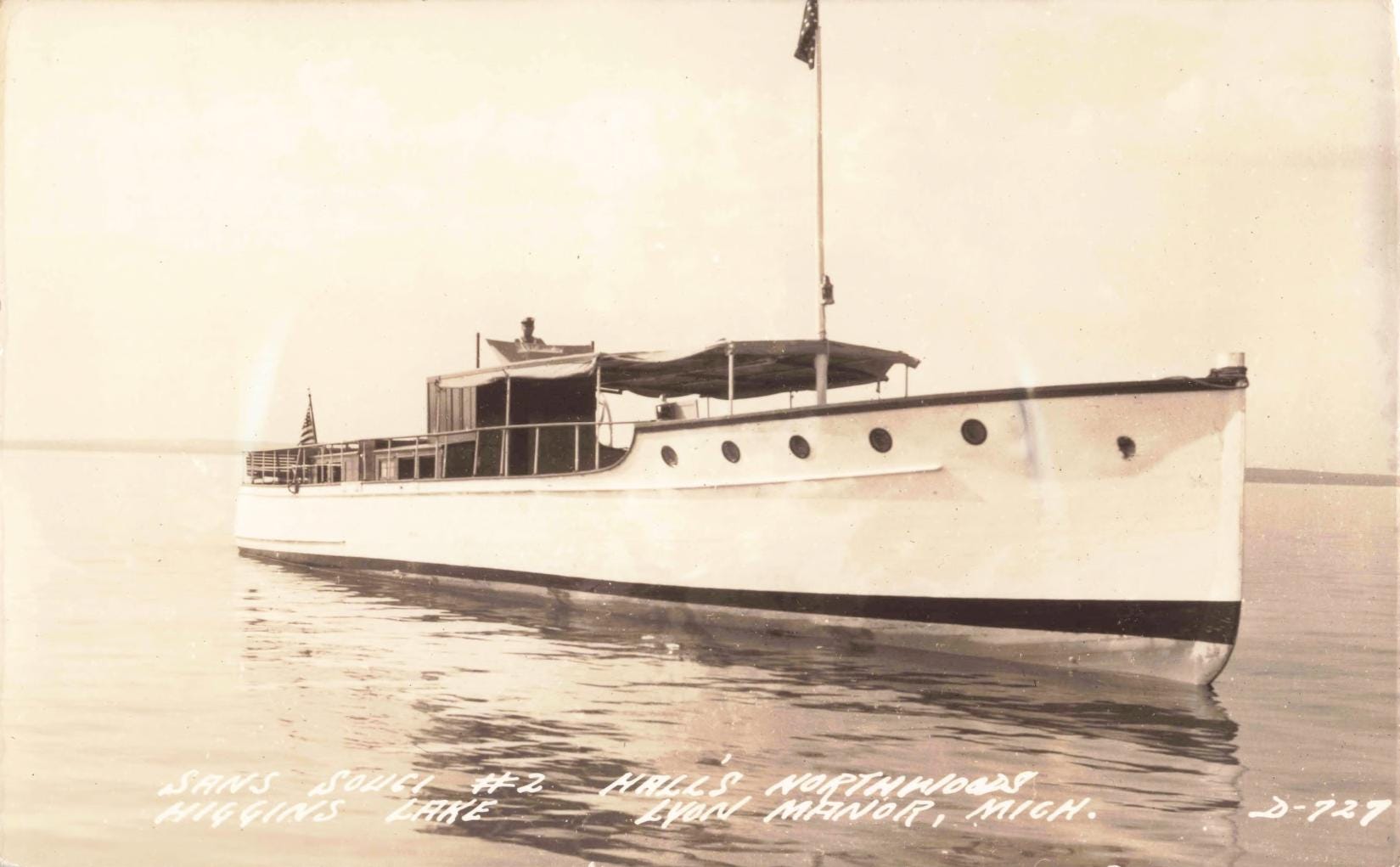
A postcard of “Sans Souci #2” tied to Hall’s Northwoods hints at something many people forget: lake vacations had transportation. Not everyone arrived with a boat. Some places ran launches that moved guests, supplies, and luggage along the shoreline.
That changes how you read the lake. It wasn’t only private cottages. It was a network.
The Cut: a calm scene with a secret
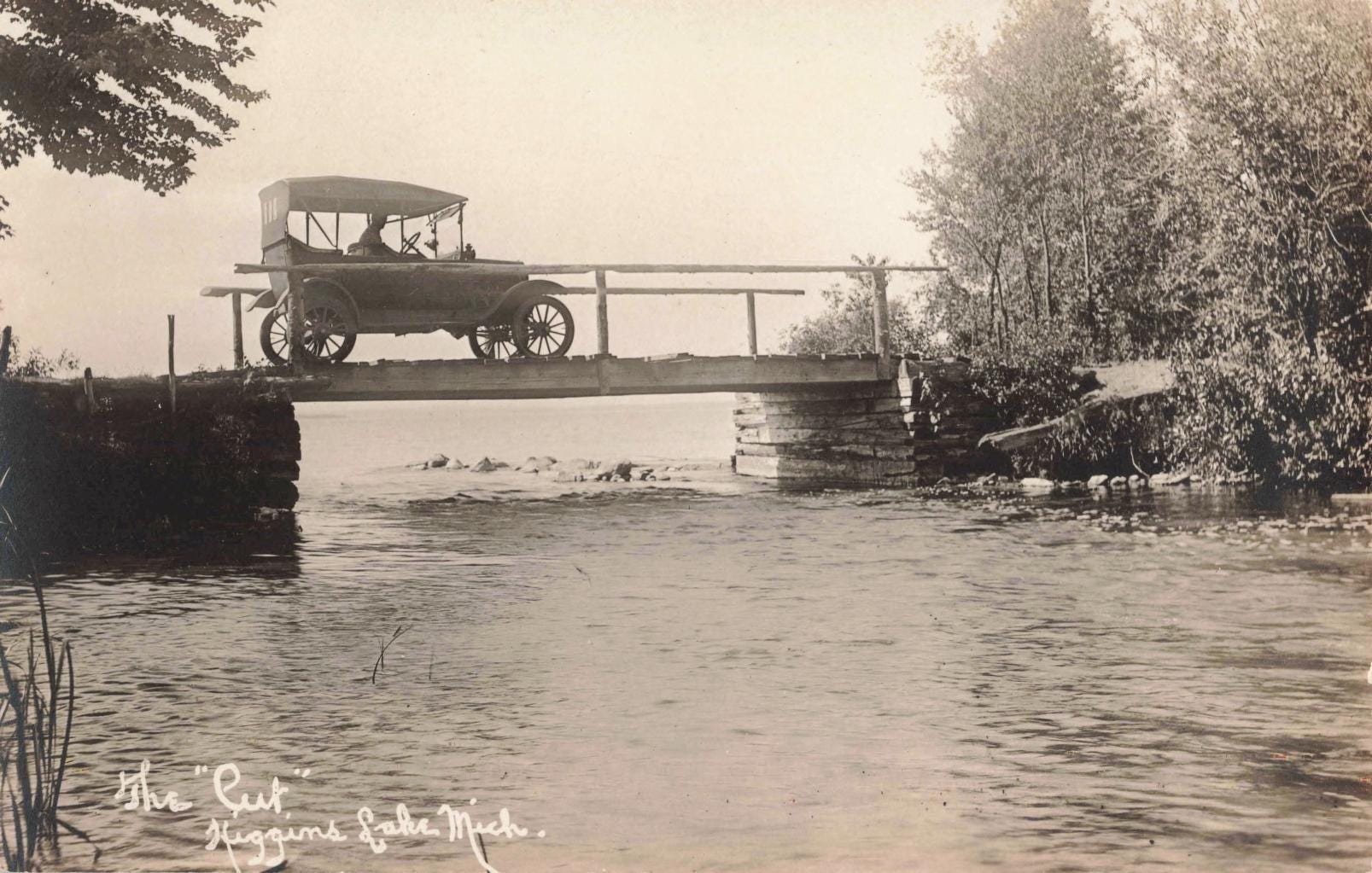
One of the quietest photos is the one labeled “The Cut.” A bridge. A car. Water moving underneath. It looks simple, but it raises a bigger point: the Higgins Lake experience people remember — stable shorelines, docks that line up, familiar beaches — can depend on behind-the-scenes control and maintenance.
That’s the tension I lean into in the video. The lake feels natural. And parts of its stability are managed.
Gas, groceries, and getting there
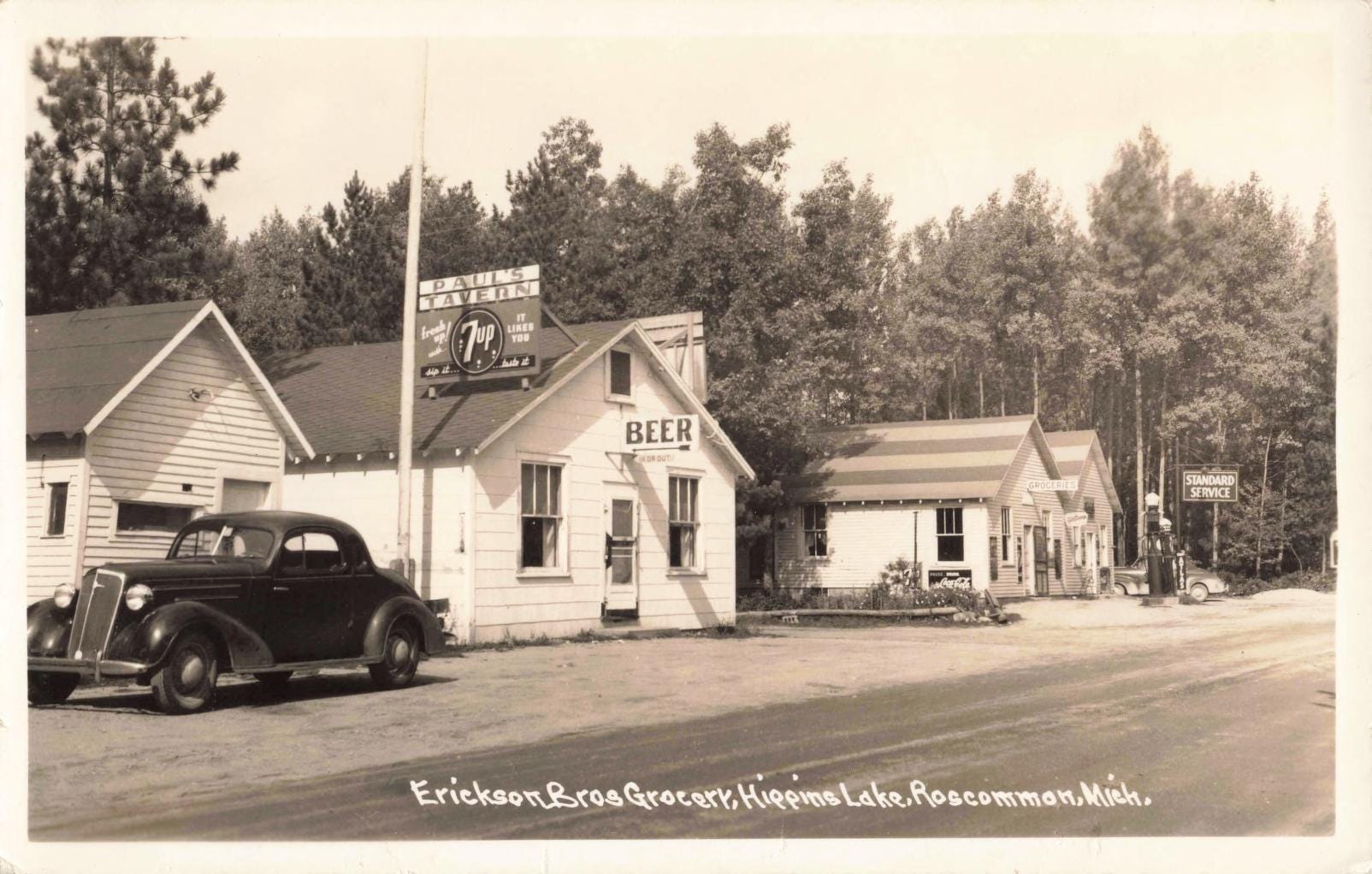
Vacation towns run on basics. A photo outside Erickson Brother’s Grocery advertises gas and oils — proof that Higgins Lake was tied to the auto era. People arrived by road, needed fuel, needed food, and wanted a place that felt reliable after a long drive.


